Handle DSARs
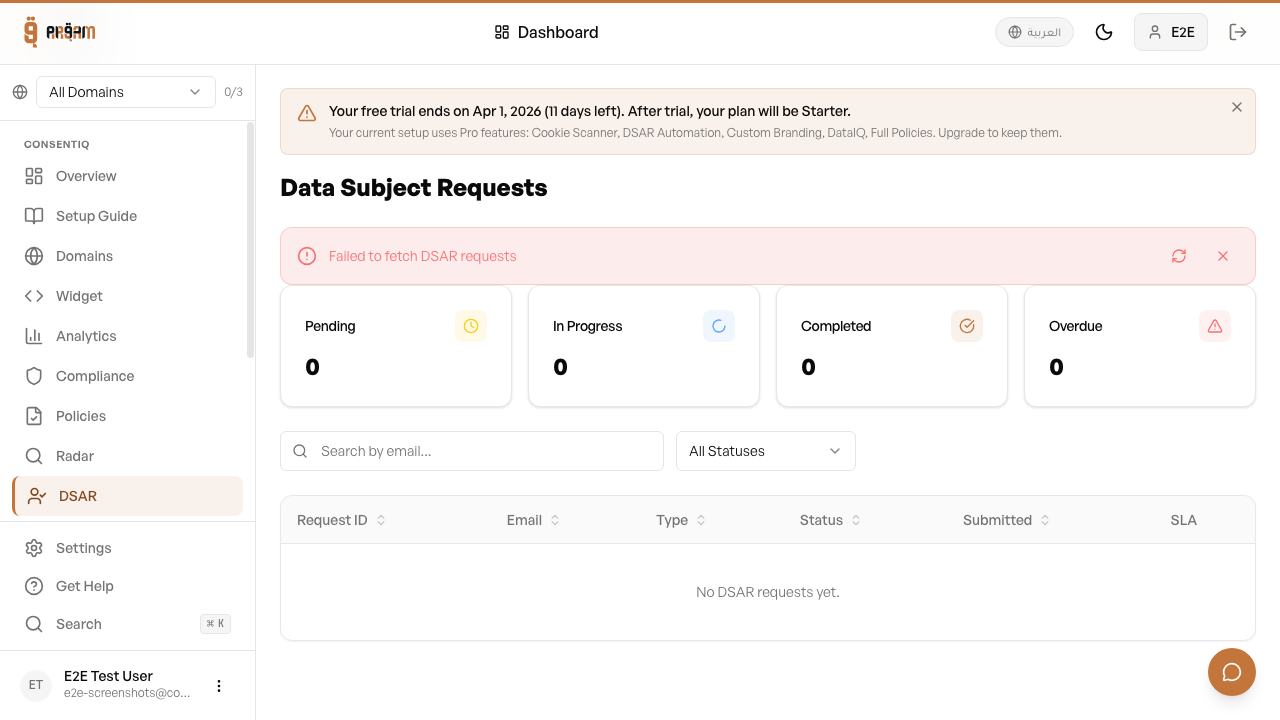
Data Subject Access Requests (DSARs) are formal requests from individuals to access, correct, or delete their personal data. Arqam360's DSAR module helps you manage these requests efficiently.
What is a DSAR?
Under GDPR, PDPL, and UAE PDPA, individuals have the right to request access to their personal data, correction of inaccurate data, deletion of their data, and restriction or portability of their data.
DSAR Types
- Access Request — The individual wants to see their data
- Rectification — The individual wants to correct inaccurate data
- Erasure — The individual wants their data deleted (right to be forgotten)
- Restriction — The individual wants to limit how their data is processed
- Portability — The individual wants their data in a machine-readable format
Receive the request
DSARs can come via email, form, or the Arqam360 DSAR portal.
Verify identity
Confirm the requester's identity before processing.
Set status to In Progress
Arqam360 automatically triggers data retrieval when status is set to 'in_progress'.
Review retrieved data
Check the automated results and add any manual data.
Respond within deadline
GDPR: 30 days. PDPL: 30 days. Complete the request in time.


Automated Data Retrieval
When you set a DSAR to 'in progress', Arqam360 automatically retrieves data from connected sources: consent records from Arqam360, customer data from Shopify (if connected), and customer data from Salla (if connected).
Next Steps
Was this article helpful?